
Chimney repair in Aurora.
We repair the parts that wear out soonest: crowns, caps, flashing, mortar, firebrick and liners. The aim is to act while the damage is still minor and water and heat have not made it worse.
- Based in AuroraThree counties, one city
- We phone youTo choose a day together
- Online formAt any hour
Photo: University of Colorado School of Dental Medicine Building, ProudGamecock, CC BY-SA 4.0
What we repair, from the top down.
Every part of a chimney ages differently. These are the usual repairs, set against the weather on the plains east of Denver.
Crowns.
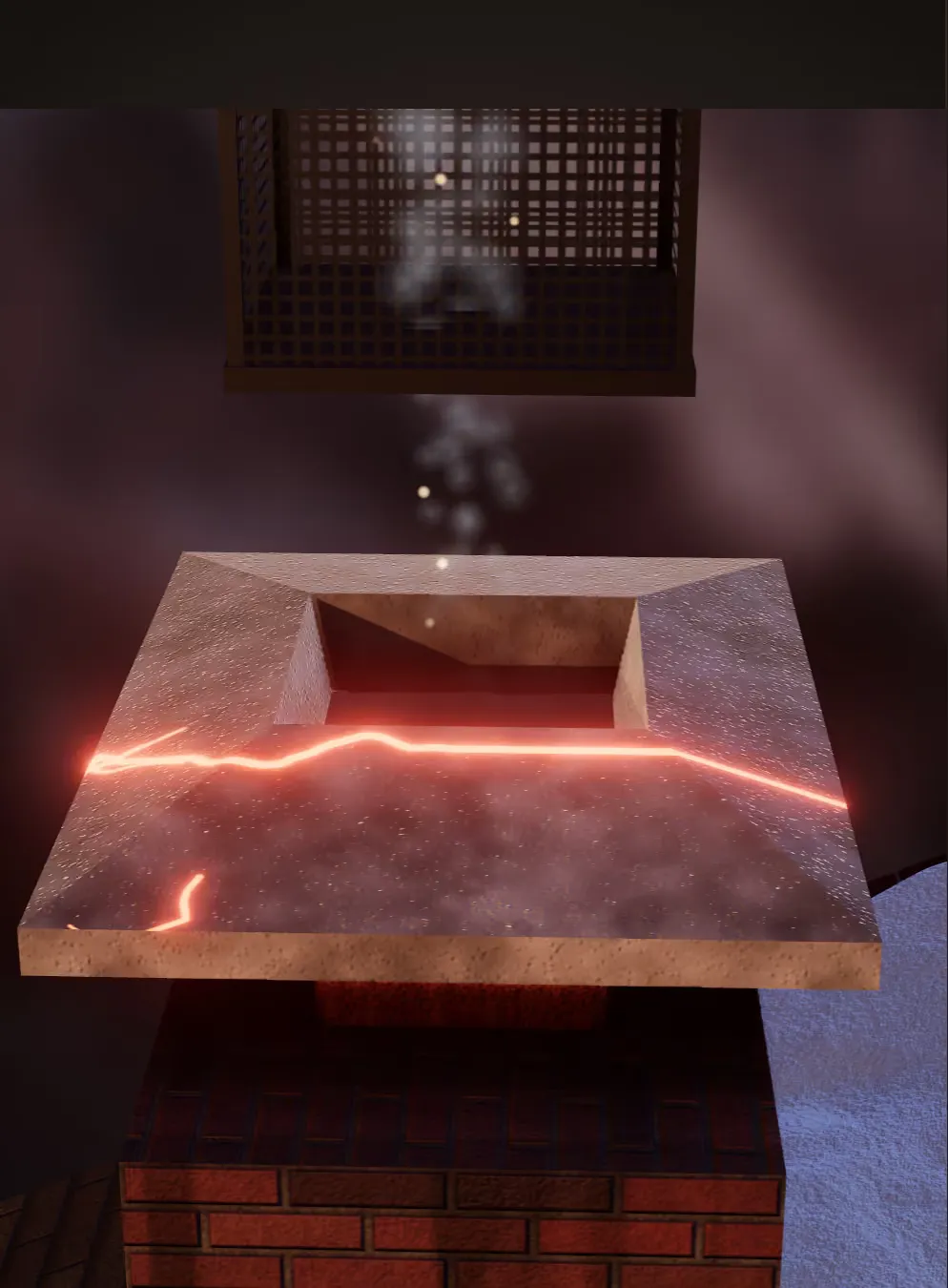
Across the top of the masonry lies the crown, a concrete slab that sends rain and melting snow off the roof and clear of the brick and flue. That job leaves it more exposed than any other part of the stack.
NOAA's normals for the Cherry Creek Dam station give January days between 16.9°F and 47.3°F and 172.0 nights a year at or below freezing. On each such night, ice in a hairline crack forces it a little wider. A hairline crack can be sealed; a slab that crumbles or has come away from the liner must be removed and recast.
Illustration Caps and mesh.
The cap keeps birds, squirrels, rain and snow out of the flue, and its screen is the part that stops sparks. Under section R1003.9.2 of the International Residential Code, screen openings may measure no more than 1/2 inch.
Metal caps get dented by hail, loosened by wind and corroded by rust. After a storm, check for dents, backed-out screws, rusted seams, and a screen that sags or is blocked.
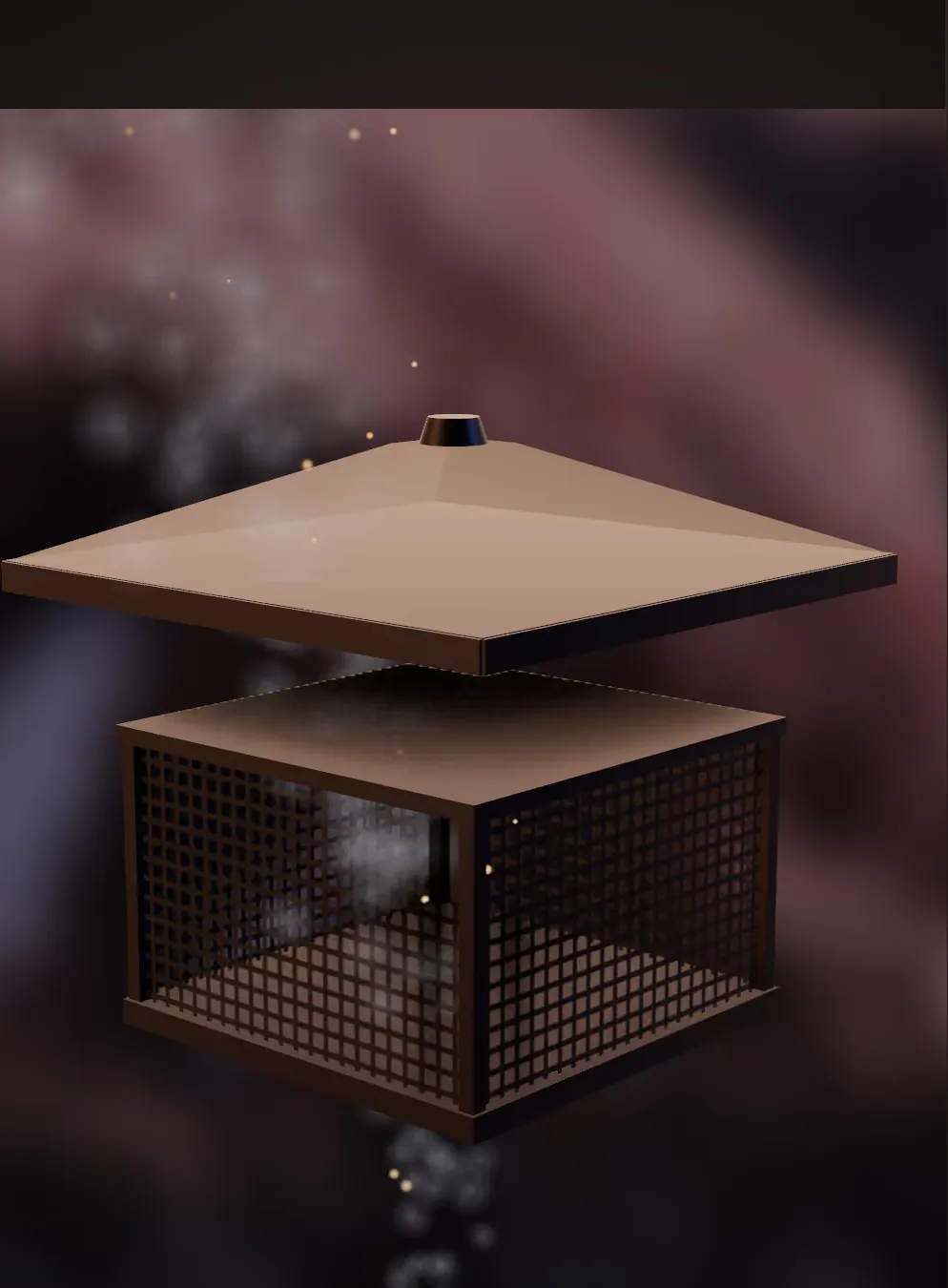
Illustration Flashing at the joint.
Flashing is what seals the gap where chimney meets roof. Snow melts slowly on the uphill side, so leaks tend to start along that edge when it lifts or when the sealant bead wears thin; in a hot summer the sealant can dry out long before winter tests it. The first sign inside is often a brown ceiling stain or damp on the attic wall beside the chimney.
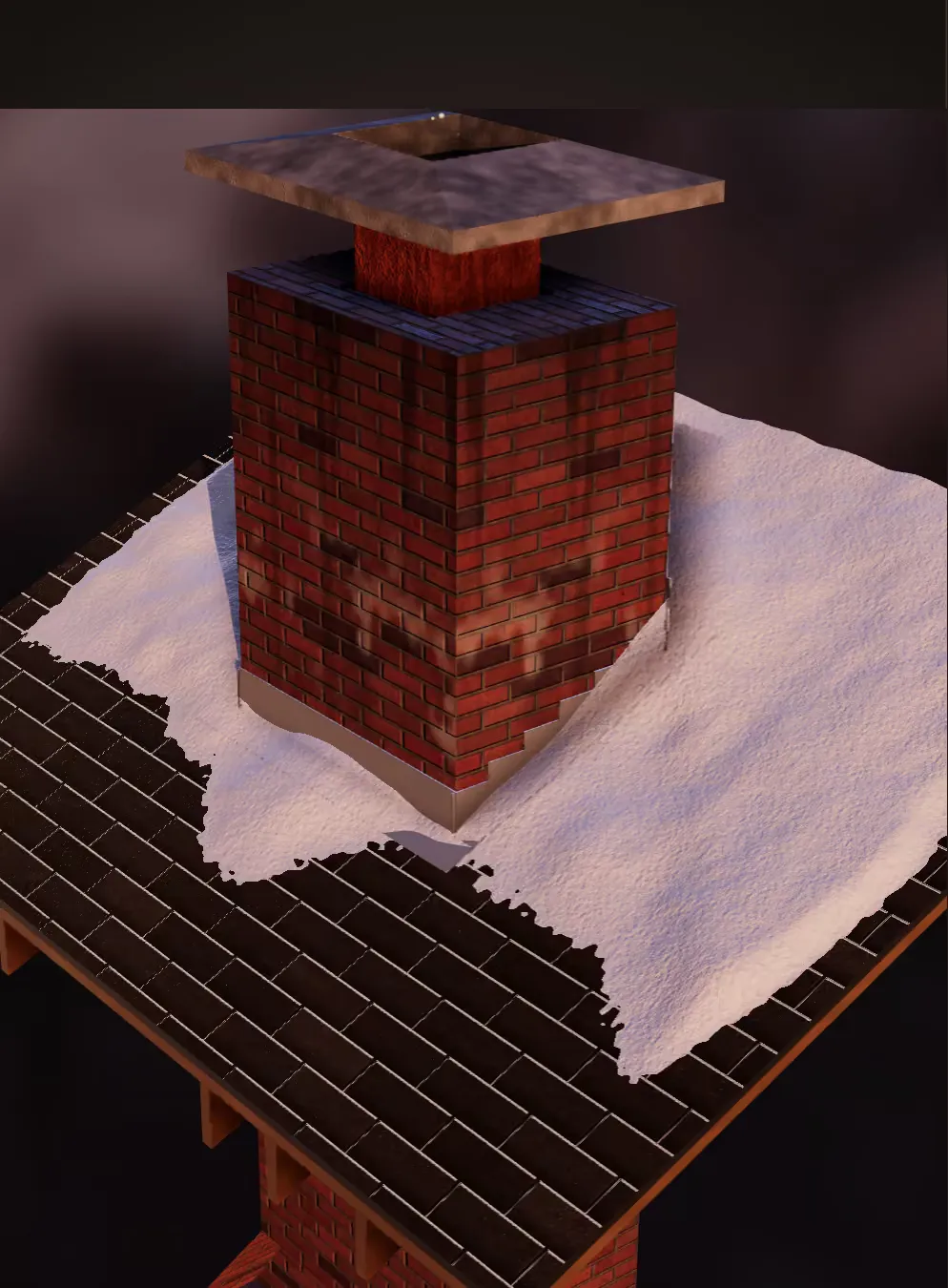
Illustration Inside the firebox.
Heat and flame bear directly on the firebrick and on the mortar between the bricks. When joints gape and bricks crack, heat can reach the framing behind, which is why a small gap closed early spares the framing.
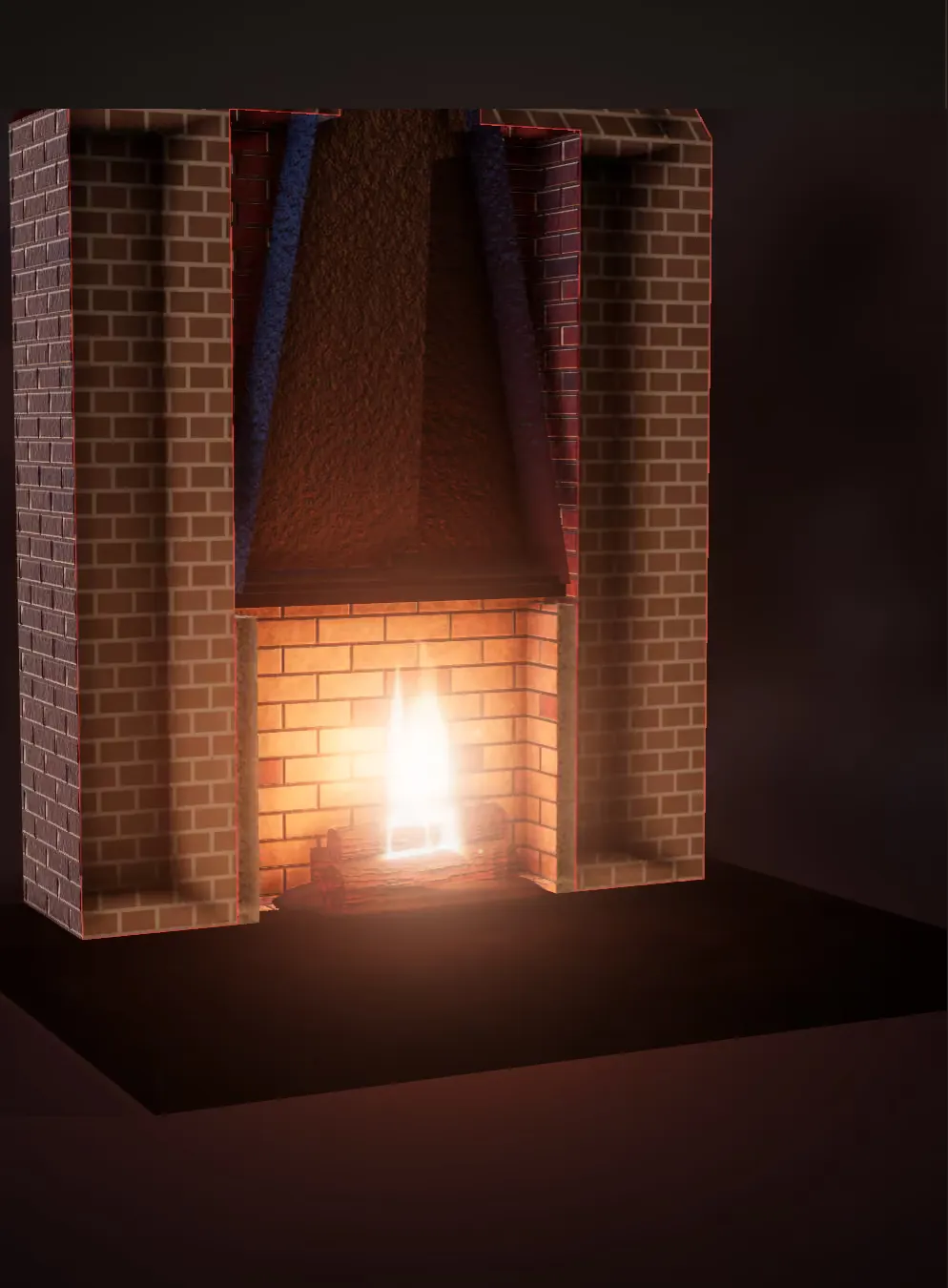
Illustration The flue liner.
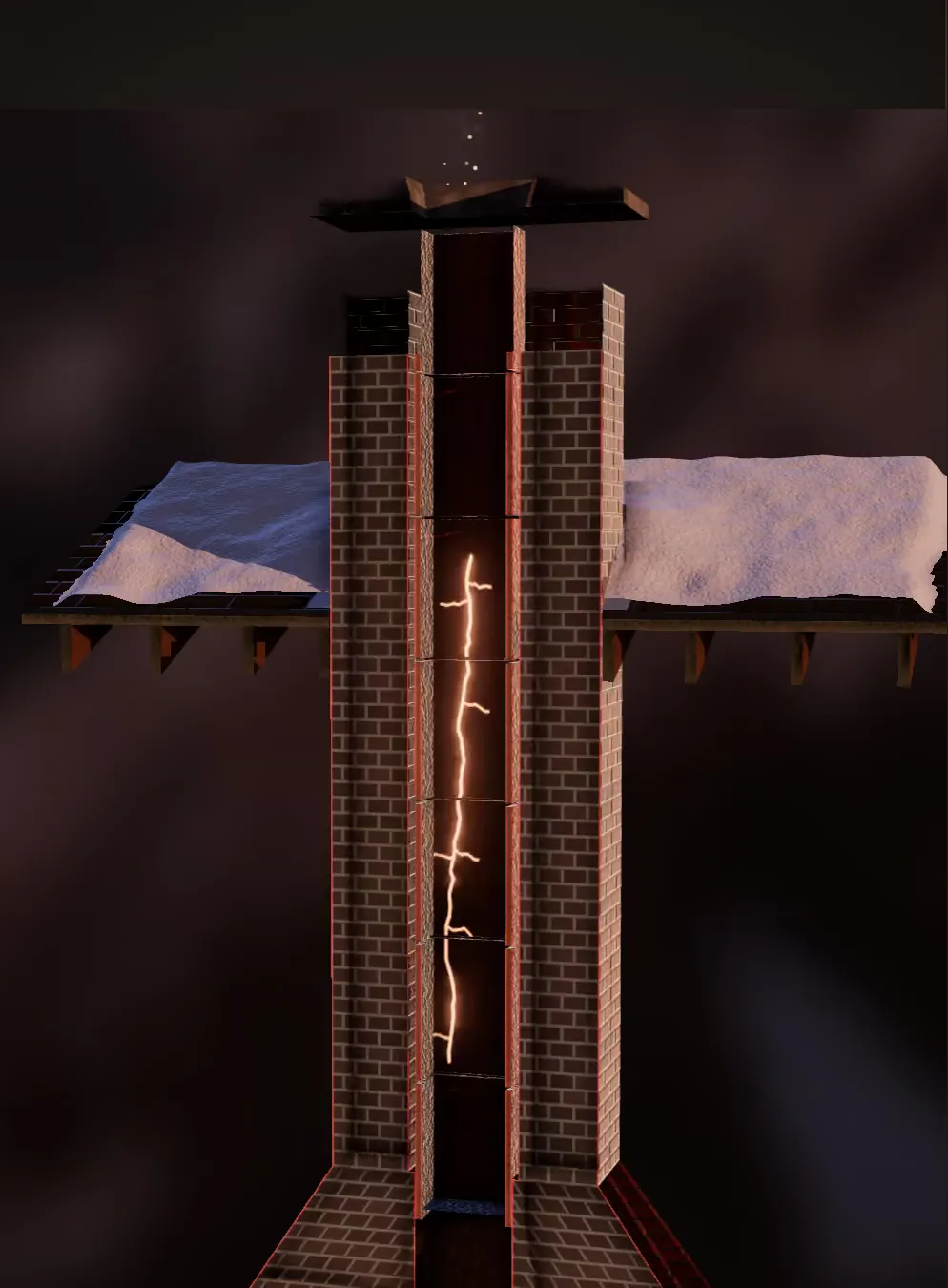
Between damper and cap, the liner takes smoke and heat away from the house. If a tile has cracked or moved, or a seam of metal liner has corroded, heat can get to the framing and fumes into living space, and from the roof or the firebox the fault generally cannot be seen. A camera passed through the flue shows it, and so does a Level 2 inspection. The median Aurora home dates from 1985, so the typical flue has more than forty years of service.
Illustration
Repair questions, answered.
Short replies, each with its source where there is one.
Why does a crown crack?
Being the topmost part, the crown takes every freeze and thaw. Water gains roughly 9 percent in volume as it turns to ice, so a hairline crack that holds meltwater opens a bit further each frosty night. Caught early the repair stays small; left alone, moisture works its way into the brick and the flue.
Does a wet hearth mean trouble?
Most of the time. Dampness in the fireplace, or a stain on the ceiling near the chimney, nearly always means water is getting in from above: through the cap, the crown, the flashing, or tired mortar joints. An inspection can find where.
What does tuckpointing mean?
It means replacing worn mortar joints with new mortar. Mortar is meant to wear out before brick does, so some wear is normal; the trouble starts once joints open and water gets behind the face. Repointing early keeps the bricks seated.
Is a cap necessary?
Almost always. With none, rain, snow, birds and squirrels reach the flue and nothing contains sparks. The model code (IRC R1003.9.2) caps screen openings at 1/2 inch.
Do I get the plan before any work starts?
Yes. We report our findings from the cap down to the firebox, and you choose which repairs go ahead and when.
How do I begin?
Phone (983) 213-4946, or put on the form below what you have noticed; it takes requests at any hour.
Describe what you have noticed.
Write a few lines on the form, or phone us. Someone calls back so that we can choose a day together.
- 1Your request reaches us By phone, or as a few lines on the form.
- 2We ring you back We talk it over and choose a day that suits you.
- 3The visit, roof to hearth We work down the stack, one part after another.
- 4The decision is yours We describe what we saw, and you decide what comes next.
Online form
Open at any hour, day or night
Photo: Plains Conservation Center, Colorado 02, Zenhaus, CC BY-SA 3.0